
Strategy guide
Voisins du Zéro (Neighbors of Zero)
French call: ~17 numbers on the zero side of the wheel in one multi-chip package.
Best for: European/French tables with racetrack call bets, and players learning wheel sectors
Overview
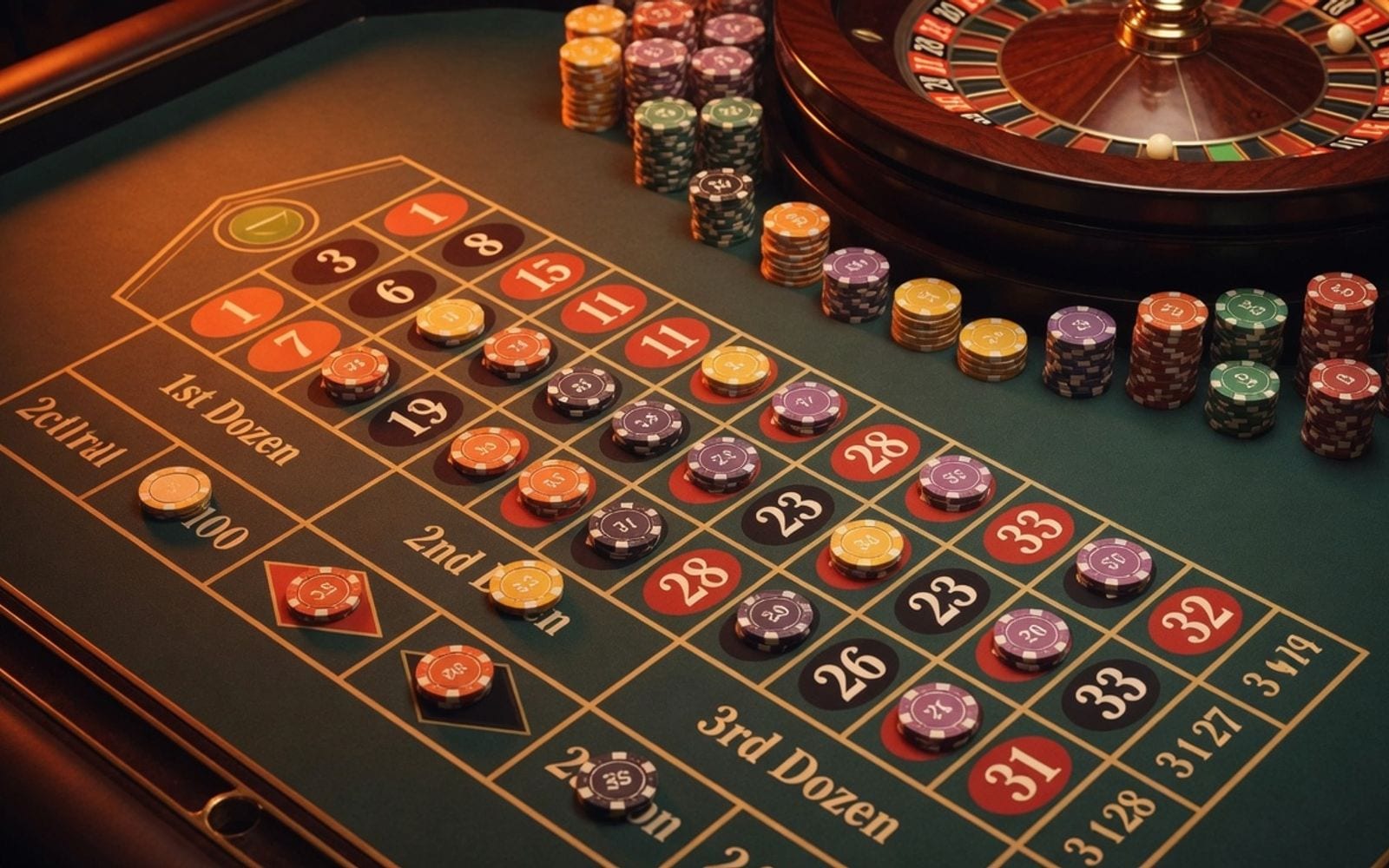
Voisins du Zéro (“neighbors of zero”) is a traditional French call bet covering 17 numbers on the zero side of a single-zero wheel — the arc from 22 through 0 around to 25 on the cylinder layout.
It is a coverage product, not a progression. Classic dealing uses a 9-unit call: multiple splits, a 0-2-3 street-style piece, and a corner on 25-26-28-29, so different hits pay different nets.
Rough hit chance is 17/37 ≈ 45.9% on European. High hit rate feels safe; package cost and uneven payouts still leave a house edge of about 2.70% on standard French/European math (American double-zero is about 5.26% and often lacks these calls).
Sister French calls complete the wheel map: Tiers du Cylindre (the opposite third) and Orphelins (the remaining “orphan” numbers). Learning all three teaches wheel geography faster than felt color alone.
Available mainly on French/European-style tables and live games with a racetrack. Many American layouts and simple online UIs do not offer named calls — you would have to piece the bets manually.
Visual progression
*1–12 typically uncovered in the classic Bond layout.
How it works
- Confirm the table offers French calls (Voisins, Tiers, Orphelins) or that you can place the equivalent manual bets.
- Announce “Voisins” (or Voisins du Zéro) for the table’s unit multiple — classically 9 chips/units per call; ask the dealer if the minimum multiple differs.
- Know the 17 numbers before you raise size: 0, 2, 3, 4, 7, 12, 15, 18, 19, 21, 22, 25, 26, 28, 29, 32, 35 (wheel order clusters around zero).
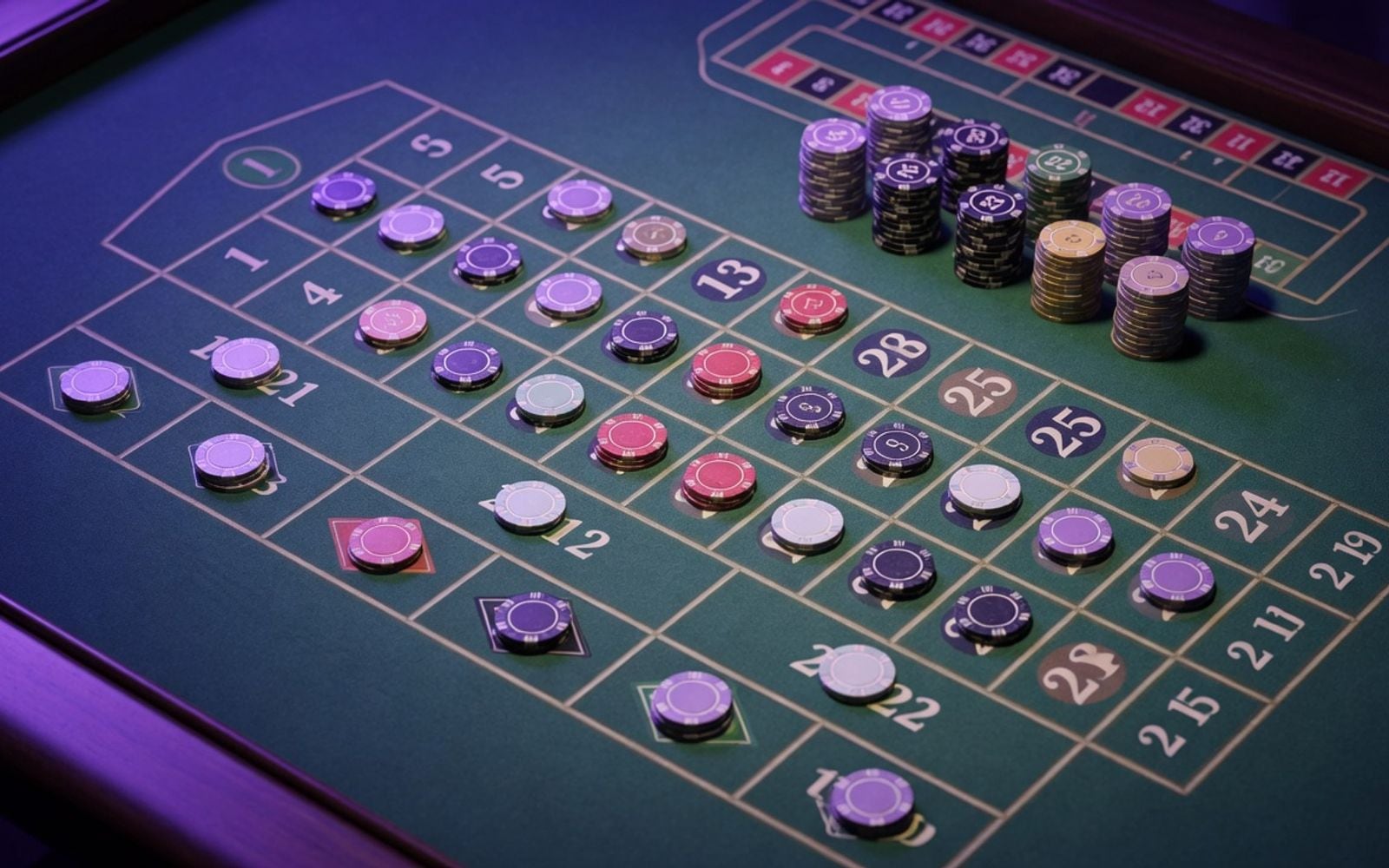
- Understand chip placement in the classic 9-unit call: 2 units on 0-2-3, 1 unit each on splits 4/7, 12/15, 18/21, 19/22, 32/35, and 2 units on the 25-26-28-29 corner — exact dealing can vary slightly by house procedure.
- Play flat packages for a measured sample, or scale the whole 9-unit block only by a written plan — do not invent a hybrid Martingale mid-hand.
- Compare results with Tiers (opposite arc) and Orphelins (leftover numbers) as separate sector tools, not as “due” rotations after a miss.
- Prefer French/European single-zero rules; La Partage/En Prison — when offered — apply to even-money bets, not as a free upgrade to call-bet edge on Voisins itself.
- Stop on spin count or package-loss budget; call bets can still lose several 9-unit packages in a row.
One Voisins call at 9 × $1 = $9 (European)
- Place one Voisins call for $9 total. Covered set includes zero and the 16 neighbors listed above.
- Ball lands 17 (outside Voisins): lose the full $9 package.
- Next call: ball lands 15 — a covered split number. That portion pays at split odds; other chips on the call lose. Net is a small win relative to $9, not a 35:1 jackpot on every neighbor.
- Later spin lands 0: the heavier 0-2-3 piece pays more strongly than a single split hit; still subtract the losing parts of the 9-unit call to see true net.
- Ball lands 26: paid via the corner piece (25-26-28-29); again, net ≠ full straight-up fantasy because most of the call loses.
- After 20 flat calls, compare total amount wagered with final bankroll. Expect a long-run drift near house edge, not a free 46% win rate in profit terms.
- Optional study: one block of Voisins, one block of Tiers, one of Orphelins — learn which arc is which without changing stake rules mid-block.
Pros
- Authentic French-roulette vocabulary and racetrack workflow
- One call covers 17 numbers without placing every chip by hand (when offered)
- Excellent for learning zero-side wheel geography
- No mandatory progression — works as flat coverage
- Natural trio with Tiers and Orphelins for sector education
Cons
- Not available on all online UIs or American tables
- Multi-unit minimum (often 9) raises cost per spin
- Payouts are uneven across the 17 numbers — hit ≠ same profit
- Still negative EV at standard ~2.70% European edge
- Easy to over-call size after a few neighbor hits
Bankroll & table limits
- Budget in 9-unit packages. At $1 units, each call is $9; at $5 units, each call is $45 — scale only what you can repeat 30+ times.
- Because nets vary by which neighbor hits, do not assume “almost half the wheel” means almost half the time you profit large amounts.
- Keep a separate session cap for call bets so sector curiosity does not empty the whole bankroll in 15 minutes.
- If the table forces a higher call multiple, reduce how many consecutive calls you plan — not the opposite.
Common mistakes
- Thinking Voisins is a system that recovers losses like Martingale — it is a layout/call, not a progression formula.
- Rotating Voisins → Tiers → Orphelins because the last sector “must be due.” Sectors are not a fairness queue.
- Playing Voisins on a double-zero wheel without checking whether the call even exists or how 00 changes coverage.
- Ignoring package math and celebrating any covered hit as if it paid a full straight-up on all 17 numbers.
FAQ
How many numbers does Voisins du Zéro cover?
Seventeen numbers on a standard single-zero wheel: 0, 2, 3, 4, 7, 12, 15, 18, 19, 21, 22, 25, 26, 28, 29, 32, and 35. That is 17/37 ≈ 45.9% of pockets.
What are Tiers du Cylindre and Orphelins?
They are the other classic French sector calls. Tiers du Cylindre (“third of the wheel”) covers the arc opposite zero (commonly 12 numbers with a 6-unit call). Orphelins (“orphans”) covers the numbers left out of Voisins and Tiers (commonly 8 numbers). Together, the three calls are a map of the wheel, not a forecast of the next spin.
Is Voisins a system like Martingale?
No. Voisins is a call coverage layout. You may combine it with progressions, but the call itself does not double after losses or guarantee recovery. Expectation stays negative under normal casino rules.
Why do some Voisins hits pay more than others?
The 9-unit call is not nine equal straight-ups. More chips sit on 0-2-3 and on the 25-26-28-29 corner than on a single split, so nets differ by landing spot even though all 17 are “covered.”
European vs American for Voisins?
Voisins is a French/European single-zero tradition. American double-zero wheels often lack the call; if you recreate neighbors manually, the extra 00 worsens overall edge (about 5.26% vs about 2.70%) and changes which pockets exist. Prefer single-zero French/European tables for this bet family.
Compare with other systems
- James BondSimilarMedium · Beginner
Another fixed multi-bet coverage package — felt-oriented rather than French racetrack calls.
- RomanovskySimilarMedium · Intermediate
High hit-rate coverage with dozens and corners; different map, same “frequent small nets” lesson.
- Flat BettingAlternativeLow · Beginner
Repeat the same Voisins package size every spin to study sector variance without progression noise.
- ShotwellAlternativeHigh · Advanced
Smaller ~10-number inside map vs Voisins’ 17-number zero-side call.
- 666 StrategySimilarHigh · Advanced
Heavy multi-bet coverage school — near-full wheel packages with thin margins and fat open-number losses.