
Strategy guide
666 (Devil's Wheel) Strategy
66-unit near-full coverage — color, six splits, and three straight-ups; four numbers open.
Best for: High-budget entertainment play that wants very frequent hits and accepts large package cost
Overview
The 666 strategy (nicknamed Devil's Wheel partly because roulette numbers 1–36 sum to 666) is a heavy flat coverage package that stakes 66 units per spin and aims to leave only about four numbers uncovered on a European wheel.
A widely taught color-based version: 36 units on red or black (1:1); 4 units on each of six splits — 0–2, 8–11, 10–13, 17–20, 26–29, 28–31 (24 units); and 2 units on each of three straight-ups chosen from the seven still-open candidates of the opposite-color group (often from 4, 6, 15, 22, 24, 33, 35), totaling 66.
Properly built, color + those splits + three straights cover 33 of 37 European pockets. The four open numbers produce a full −66 unit wipeout. Many wins are only partial: color alone may not repay the whole package after inside losses.
Hit frequency is high, which feels powerful, but package economics and house edge still dominate. European edge remains about 2.70% on money wagered; American double-zero is about 5.26% and leaves more danger pockets.
Other 666 writings use different stacks (dozens + highs + insides). Always list uncovered numbers and total units before playing; the name alone is not a single standard.
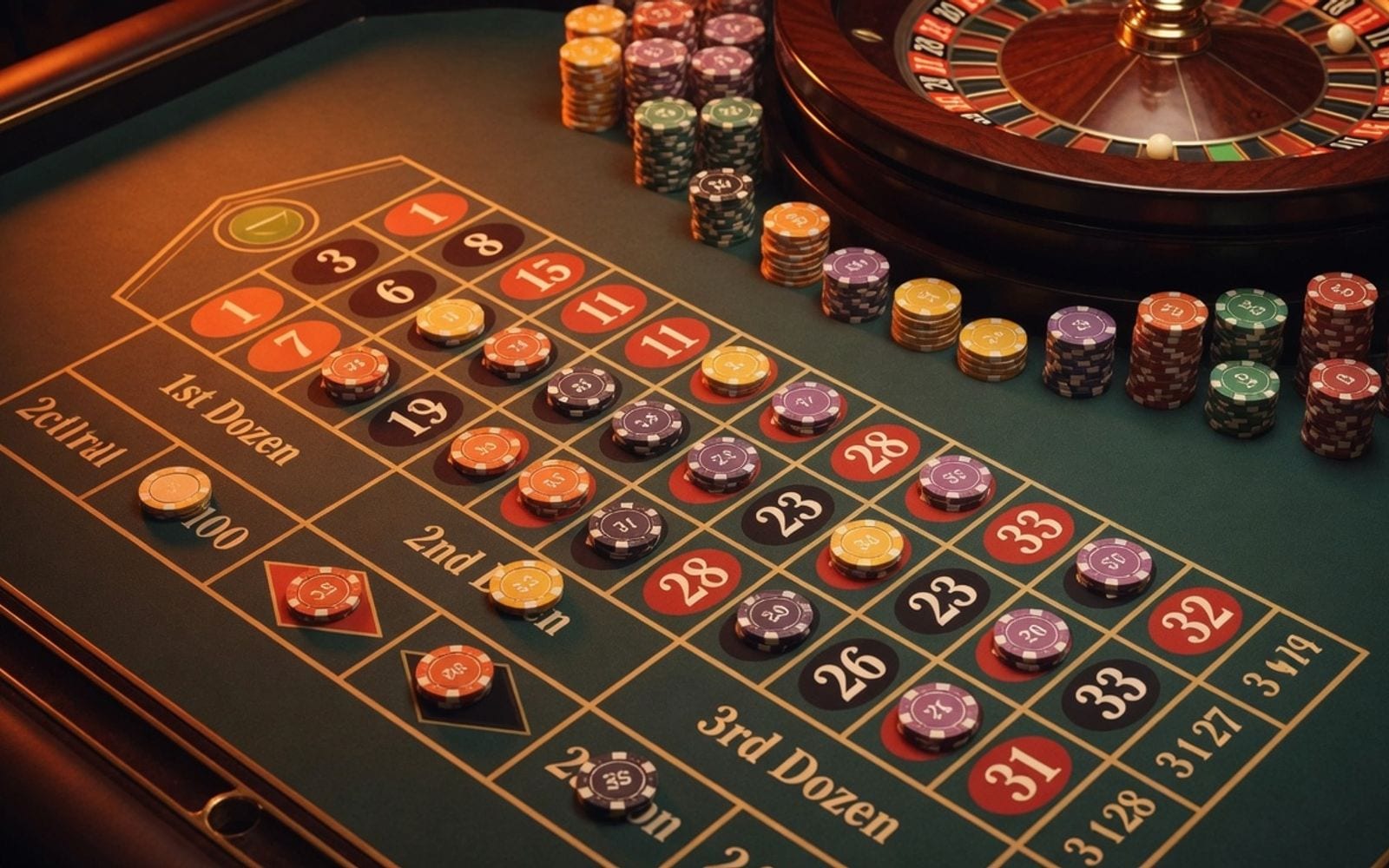
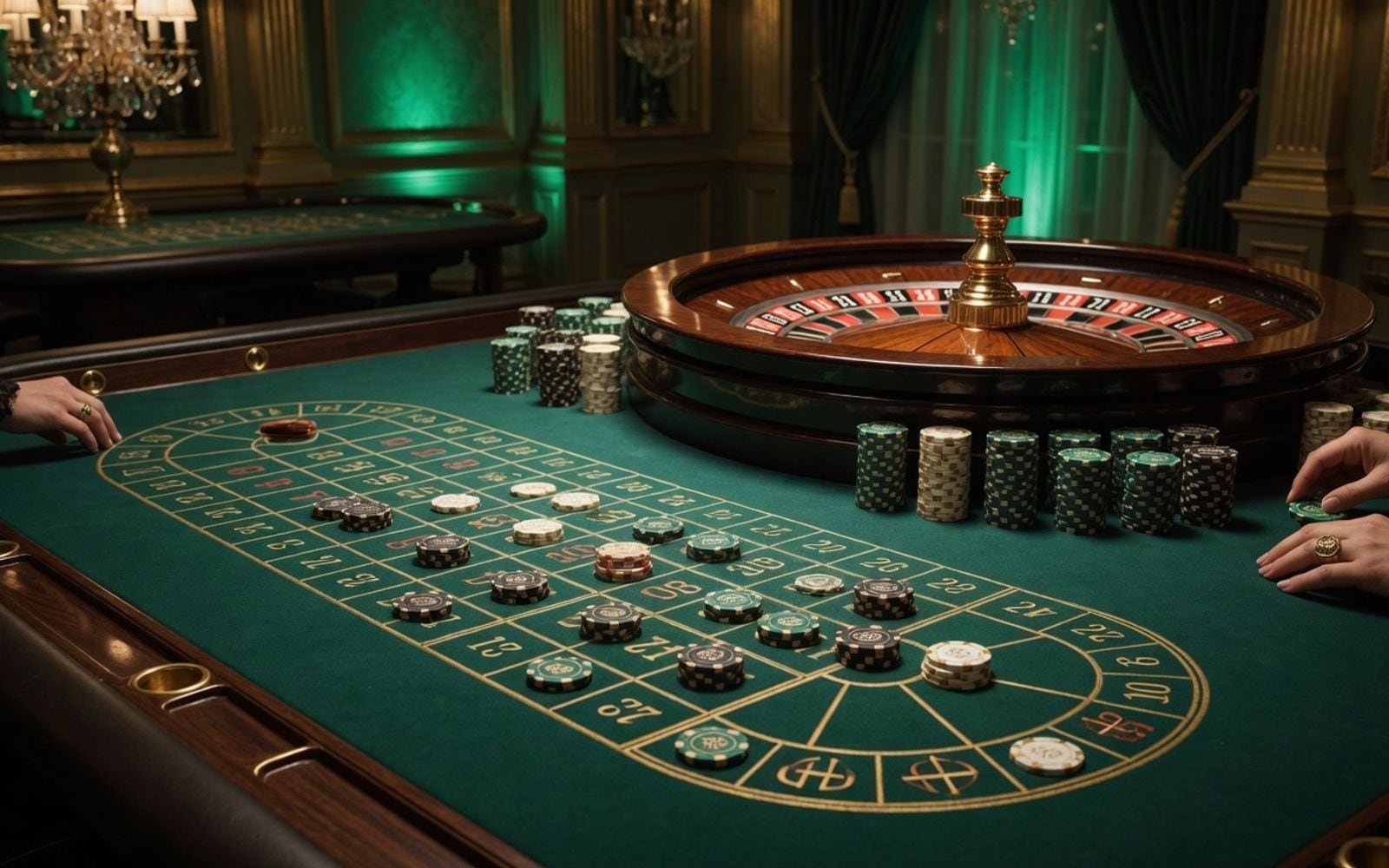
Visual progression
How it works
- Decide the classic 66-unit color variant or another published stack. Write the uncovered set first — if you cannot name the four opens, do not deal chips.
- Color variant step 1: bet 36 units on red or black (example uses one even-money color as the base).
- Step 2: place 4 units on each split 0–2, 8–11, 10–13, 17–20, 26–29, and 28–31 (24 units). These add zero and many numbers outside your color.
- Step 3: from the remaining open candidates (commonly 4, 6, 15, 22, 24, 33, 35 when building around one color + those splits), put 2 units straight-up on three of them (6 units). Four numbers stay naked.
- Each spin costs 66 units flat. Do not remove opens mid-session without rebuilding the math.
- When an inside number that is also on your color hits, payouts can stack (color + split or straight). When only a weakly covered area hits, you may win a bet yet still net a loss versus the 66-unit cost.
- An uncovered number or a mis-set map loses the entire 66. Zero is covered in the classic split list (0–2); pure outside-only variants may leave zero open.
- Prefer European single-zero. On American wheels, 00 is an extra wipeout risk unless you redesign coverage.
Classic 66-unit Devil's Wheel package (color + splits + three straights)
- Bet $36 on black; $4 each on splits 0–2, 8–11, 10–13, 17–20, 26–29, 28–31; $2 each on three straights from {4, 6, 15, 22, 24, 33, 35} — example 4, 15, 33 (total $66).
- Uncovered set depends on the three straights chosen; with 4/15/33 covered, opens might be 6, 22, 24, 35 (verify on a layout chart every time).
- Black split number hits (for example 11): collect split 17:1 on $4 plus black 1:1 on $36; net after losing other insides is a strong win.
- A pure opposite-color number with no inside chip: color loses and insides lose — full package loss path.
- Open number hits: −$66 immediately.
- Scale only in multiples of the whole package ($132, $198…) so ratios stay intact.
- Stop after a fixed number of packages; high hit rate tempts overplay.
Pros
- Very high European coverage (~33/37) when the map is built correctly
- Memorable 66-unit ritual and Devil's Wheel theme
- No progression tracking in the base form
- Stacked color + inside hits can produce large single-spin nets
- Includes a path to cover zero via the 0–2 split in the common version
Cons
- Expensive: 66 units every spin demands a large bankroll
- Four open numbers each cost a full package — variance spikes hard
- Partial hits can look like wins yet finish net-negative versus 66 units
- Complex placement invites dealer and player errors under time pressure
- Does not beat ~2.70% European or ~5.26% American house edge
Bankroll & table limits
- At $1 units the spin costs $66. A cautious buffer is 10–20 packages ($660–$1,320) before open-number clusters feel survivable.
- At $5 units the same map is $330 per spin — often high-roller territory only.
- Never fund 666 with money needed for bills; open-number streaks are not rare over long sessions.
- If 66 units is too large, use Romanovsky (8 units, 32 numbers) or Bond (20-unit scale) instead of underfunding this map.
Common mistakes
- Forgetting which four numbers are open and assuming almost everything is safe
- Picking three straight-ups that overlap splits and accidentally leaving more than four opens
- Celebrating a color hit without computing net versus the full $66 cost
- Moving to American double-zero without a plan for 00
FAQ
Why is it called 666 or Devil's Wheel?
Two overlapping reasons appear in player culture: the fixed 66-unit stake size, and the curiosity that numbers 1 through 36 sum to 666. Neither implies a mystical edge.
How many numbers does 666 cover?
The classic color + six splits + three straight-ups construction targets 33 covered and 4 open on European roulette (33/37). Always re-count your personal straight-up choices.
Is every winning number a net profit?
No. Because 66 units sit on the table, some covered outcomes pay less in combined returns than the package cost. True package profit usually needs stacked or high-odds insides to fire.
Does 666 overcome the house edge?
No. High coverage only changes variance. European play still expects about 2.70% loss on total amount wagered over time; American double-zero is about 5.26%.
How does 666 compare with Romanovsky?
Romanovsky uses 8 units for 32 numbers and aims for +1 unit nets. 666 uses 66 units for ~33 numbers with much larger absolute wins and wipeouts. Same coverage family, very different bankroll demand.
Compare with other systems
- RomanovskySimilarMedium · Intermediate
Cheaper high-coverage dozens/corners package with thinner unit wins.
- James BondVariantMedium · Beginner
Lighter three-bet coverage (25 numbers) at a far lower spin cost.
- KavourasAlternativeHigh · Advanced
Mid-coverage 20-number inside mix without the 66-unit burden.
- Voisins du ZéroAlternativeMedium · Intermediate
French-call neighbors-of-zero sector betting instead of color-plus-splits.
- Flat BettingOpposite approachLow · Beginner
Minimalist same-stake even-money play when package complexity is the problem.