
Strategy guide
Kavouras Bet Strategy
Named ~20-number package: zero corner, high double street, and five splits.
Best for: Coverage players who want a fixed, named inside package with mixed payout tiers
Overview
The Kavouras bet, associated with Ioannis Kavouras, is a flat mixed-inside package that covers 20 numbers on a single-zero wheel — about 54% coverage (20/37). It is a layout system, not a progression.
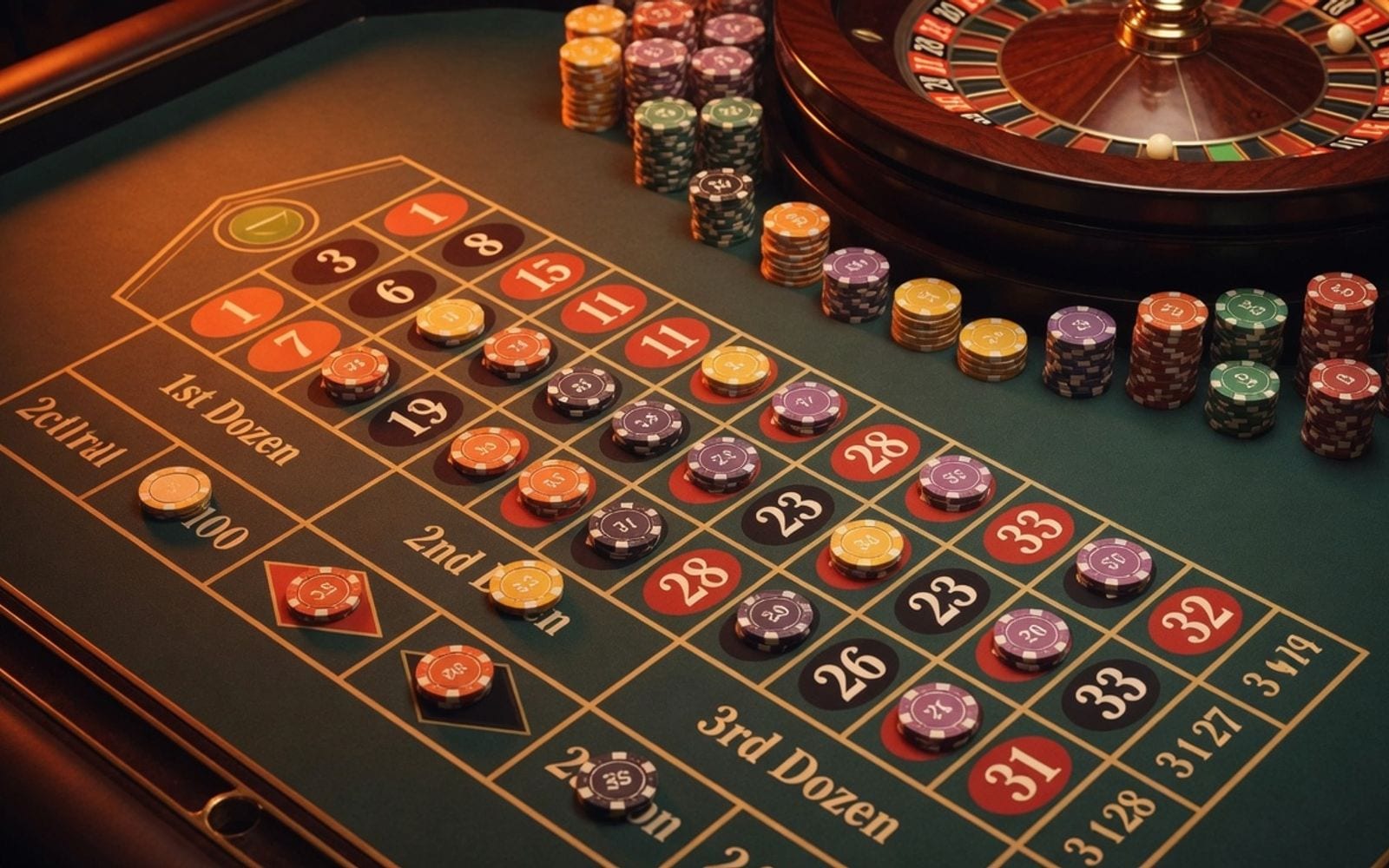
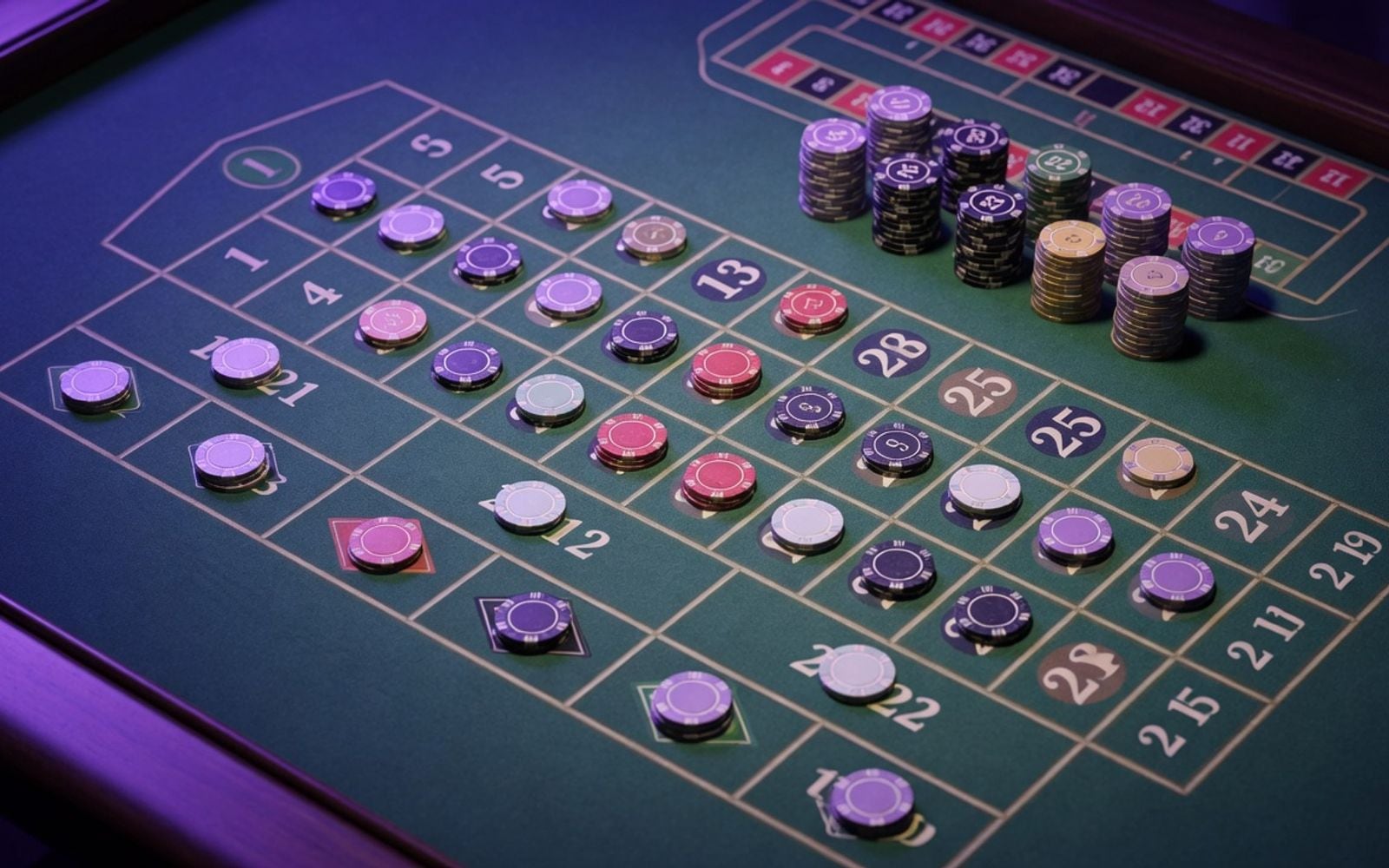
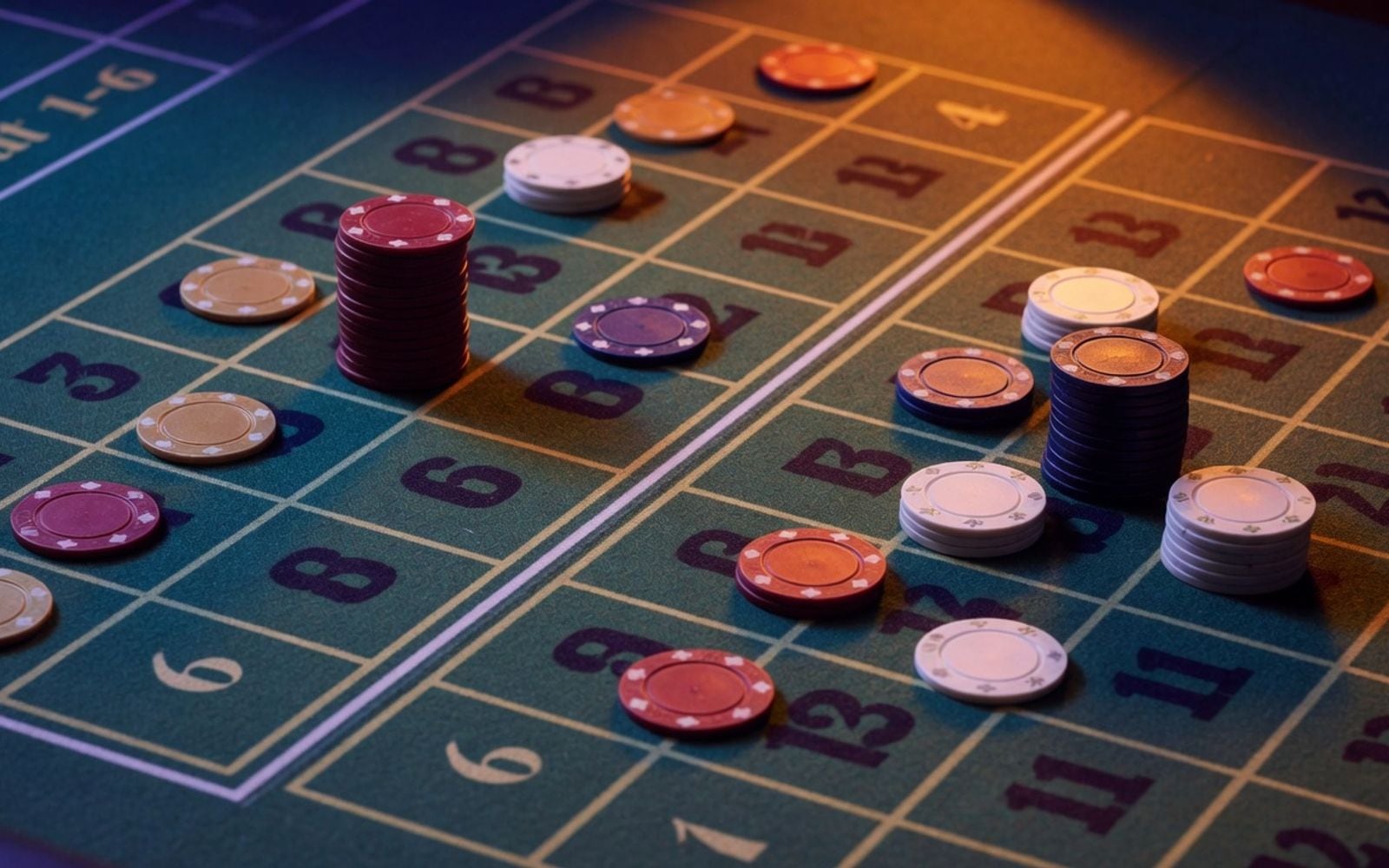
Standard staking uses 8 units: 1 unit on the 0–1–2–3 corner, 2 units on the 31–36 double street (six-line), and 1 unit on each of five splits (commonly 8–11, 4–13, 15–18, 17–20, and 27–30).
Profits are tiered by which leg hits: corner about +1 unit net, double street about +4, a split about +10; a complete miss is −8. That uneven payoff is part of the appeal and the variance.
Numbers are chosen to scatter across table and wheel sectors rather than clump in one dozen. Scattering changes the feel of streaks; it does not cancel the house edge.
Expect negative long-run EV near the table edge — about 2.70% European, about 5.26% American. Treat Kavouras as structured entertainment and layout practice, not a secret edge.
Visual progression
How it works
- Confirm a single published map and freeze it for the session. A widely taught 8-unit map is: corner 0-1-2-3 (1u); double street 31-32-33-34-35-36 (2u); splits 8-11, 4-13, 15-18, 17-20, 27-30 (1u each).
- Count coverage: 4 (corner) + 6 (street) + 10 (five splits) = 20 unique numbers including zero.
- Place the full package every spin for a pre-set trial count. Do not drop cold splits mid-test.
- If the corner wins (8:1 on 1 unit): collect corner profit and lose the other 7 units of stake → about +1 net.
- If the double street wins (5:1 on 2 units): street profit is 10 units against 6 units lost elsewhere → about +4 net.
- If a split wins (17:1 on 1 unit): split profit is 17 against 7 lost → about +10 net. Full miss → −8.
- Prefer European single-zero; American 00 is usually outside the map and worsens miss rate and edge.
- Optional mild progressions exist in forum variants — only use them if written in advance; most study is flat packages.
Eight-unit Kavouras package (European wheel)
- Bet $1 on corner 0–1–2–3; $2 on double street 31–36; $1 each on splits 8–11, 4–13, 15–18, 17–20, 27–30 (total $8).
- Ball lands 2: corner hits → approximate net +$1.
- Ball lands 34: double street hits → approximate net +$4.
- Ball lands 17: split 17–20 hits → approximate net +$10.
- Ball lands 9 (uncovered): all legs lose → −$8.
- Log which leg hit for 50–100 packages before judging feel versus math.
- Note: some diagrams swap a split (for example 13–14 instead of 4–13); always re-total unique numbers to 20.
Pros
- Clear named map that is easy to discuss and repeat
- About 54% European hit rate without paying for full-table coverage
- Tiered wins: splits can pay substantially more than the corner
- Includes zero in the corner, so green is not an automatic package wipe
- No progression tracking in the base system
Cons
- Inside-heavy variance — sequences of −8 packages are normal
- Diagram variants disagree on one or two splits; wrong chips waste the study
- Still faces full European ~2.70% / American ~5.26% style edges on the money risked
- Eight units per spin adds up faster than a single even-money chip
- Wheel chaos marketing does not change random independent spins
Bankroll & table limits
- Package cost is 8 units each spin. A serious sample of 100 packages needs 800 units of turnover — still keep a multi-dozen-unit buffer for clustered misses.
- Keep the unit small: if $8 packages sting, use smaller units only where the table allows all bet types.
- Separate entertainment money from rent money; Kavouras is for learning layout discipline, not income.
- On American wheels, budget for more total losses and avoid forcing the European map without accounting for 00.
Common mistakes
- Mixing two blog diagrams and double-covering or dropping numbers
- Raising only the hot split after it hits — that is ad-hoc and breaks package EV assumptions
- Assuming 54% wins means 54% ROI; most wins are small, misses are full packages
- Skipping zero-corner placement and wondering why 0 wiped the board
FAQ
How many numbers does the Kavouras bet cover?
Twenty unique outcomes on the standard map, including zero — 20/37 ≈ 54% on European roulette. American double-zero lowers the percentage unless you redesign the map.
What is the exact chip layout?
Common teaching version: 1 unit on corner 0–1–2–3; 2 units on double street 31–36; 1 unit each on splits 8–11, 4–13, 15–18, 17–20, and 27–30 (8 units total). Always verify your source diagram.
Does Kavouras have a real edge?
Not on a fair casino wheel. Attractive sector scatter and mid-50% hit rates do not remove the built-in house edge of roughly 2.70% (European) or 5.26% (American).
Why do split hits pay more than the corner?
Payout odds differ: splits pay 17:1 on a 1-unit stake while you only lose the other 7 units of the package, producing a larger net than an 8:1 corner or 5:1 six-line at these stake sizes.
Is Kavouras better than Romanovsky?
Different goals: Romanovsky aims for ~86% hits and +1 unit nets; Kavouras accepts ~54% hits for a chance at larger split nets. Neither is +EV; choose by variance tolerance and package taste.
Compare with other systems
- RomanovskySimilarMedium · Intermediate
Higher-coverage dozens/corners package with flatter +1 unit wins.
- ShotwellVariantHigh · Advanced
Another named number/street map focused on sector-style sets.
- James BondAlternativeMedium · Beginner
Simpler three-bet outside/mid/zero package for beginners.
- AndrucciOpposite approachHigh · Intermediate
Hot-number sampling approach versus a frozen 20-number template.
- Double StreetAlternativeHigh · Intermediate
Focuses on six-number lines rather than the full Kavouras mix.