
Strategy guide
Andrucci System
Sample ~30–37 spins, then load “hot” straight-up numbers — pattern hunting, not an edge.
Best for: Players studying why hot/cold boards feel convincing but do not create an edge on a fair wheel
Overview
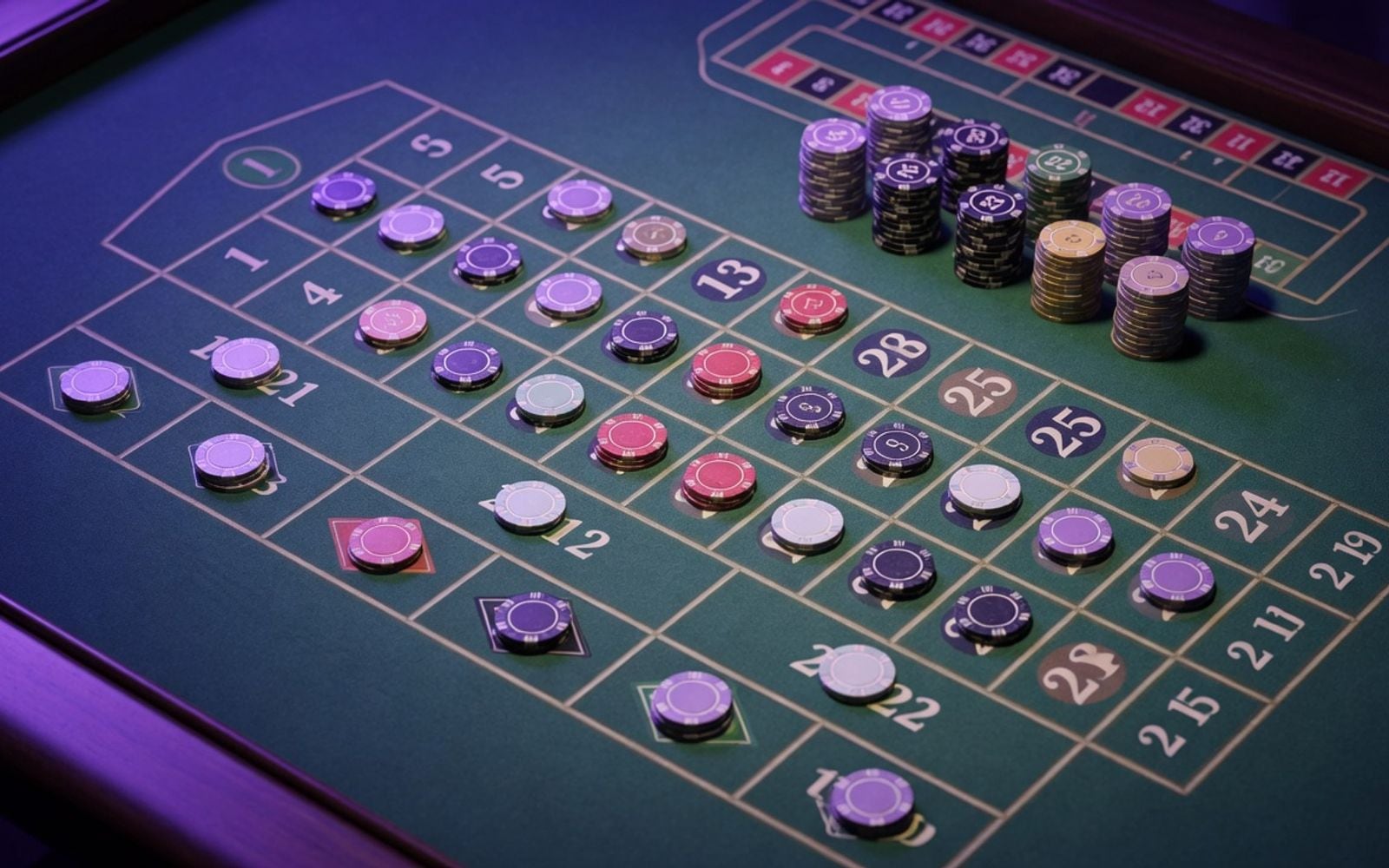
Andrucci-style play watches a fixed block of spins — often about one wheel cycle, roughly 30–37 outcomes — notes which numbers appeared most, then places straight-up bets on those “hot” numbers for a short attack phase.
It feels scientific because it uses a sample. On a fair wheel, each spin is independent: a number that hit three times in 37 spins is not more likely on the next spin. Apparent hotness in a small sample is usually noise, not a signal.
Straight-up bets pay 35:1 while true odds are 36:1 (European) or 37:1 (American). That gap is the house edge. Sampling history does not change those payouts.
House edge still applies on every chip: about 2.70% on standard European single-zero roulette, about 5.26% on American double-zero. Prefer single-zero tables if you play this for entertainment.
Treat Andrucci as a teaching tool for independence and session structure — limited observation, limited attack, hard stops — not as a way to beat the casino.
Visual progression
How it works
- Pick European single-zero when available; note table minimums for straight-up bets before you start.
- Observe a fixed sample without large wagers — commonly 30–37 spins (some players stretch to ~50). Write every outcome, or use on-screen history only if you trust it is complete for that table.
- Count hits per number. Select a small set of apparent hot numbers — often 1–5 straight-ups, not half the wheel.
- Enter a timed attack phase: bet those numbers straight up for a pre-set window (for example 15–30 spins), with equal unit size on each number.
- Do not grow the set mid-attack because a new number “looked hot,” and do not keep betting after the window ends because a number is “due.”
- Bank or stop when the attack window ends, a win goal hits, or a loss limit hits — whichever comes first.
- Optional study mode: log hit rate against expected coverage (k numbers cover k/37 on European). Compare story to math.
- Never combine unbounded loss-chase progressions with many straight-ups unless you have written both rules and can afford the product of their risk.
Sample then attack (European wheel, unit $1)
- Observation: 37 spins recorded; numbers 7, 14, and 29 each appear three times; no other number exceeds two.
- Attack plan: $1 straight-up on 7, 14, and 29 each spin → $3 total risk per spin for 20 spins (max theoretical spend $60 if every spin misses).
- Spin 1 lands 14: straight-up pays 35:1 on the $1 → +$35 on that chip; the other two $1 bets lose → net about +$33 for the spin.
- Spins 2–6 miss all three: −$3 each spin. Running result still depends heavily on that earlier hit.
- Spin 12 lands 22 (cold to your card): full package loss −$3. No rule change — stay on 7, 14, 29 until spin 20.
- End of window: stop even if you are down and “one more hit would fix it.” Recalculate only after a new observation block if you run another cycle.
- Lesson: one or two 35:1 hits can make a short sample look brilliant; long dry spells are normal for 3/37 coverage and do not prove the numbers went cold forever.
Pros
- Simple rules: observe, shortlist, straight-up attack, stop
- Forces you to watch outcomes instead of pure impulse betting
- Excellent classroom demo of independence vs gambler’s fallacy
- Fixed attack windows naturally cap session length if you obey them
- No progressive bookkeeping — stake size can stay flat
Cons
- Hot/cold logic has no predictive power on a fair, independent wheel
- Straight-up variance is severe; many consecutive package losses are normal
- Small samples overfit noise; players then bet as if noise were a map
- Does not reduce the ~2.70% European or ~5.26% American house edge
- Easy to extend the attack emotionally after a near-miss streak
Bankroll & table limits
- Size the full attack package (sum of all straight-ups) so that 20–40 full misses still fit inside a disposable session budget — straight-up droughts are common.
- A common teaching range is 1–5 numbers at 1 unit each; five $2 straight-ups is $10 per spin, so 30 misses alone are $300 before any wins.
- Keep observation cheap or free. Do not Martingale during the sample “to stay busy.”
- Prefer lower table minimums on inside bets so a multi-number package does not force oversized risk.
Common mistakes
- Treating a 30-spin leaderboard as proof a number will keep hitting — that is the hot-number myth, not statistics.
- Expanding from 3 hot numbers to 10+ mid-session after losses, which balloons cost without creating edge.
- Skipping the stop window and “riding the heat” until a win — turning a sample plan into open-ended gambling.
- Confusing a possible biased physical wheel (rare, needs rigorous data) with casual Andrucci sampling at a normal casino or RNG table.
FAQ
Do hot numbers really stay hot?
Not on a fair wheel. Each spin is independent; past frequency does not raise future probability. Clustering in short samples is expected randomness. True wheel bias is a different, rare claim that needs large samples and careful measurement — not a 37-spin glance.
How many spins should I observe before betting?
Common Andrucci write-ups use about 30–37 spins (sometimes up to ~50). Longer samples reduce some noise but still do not make last hour’s leaders more likely next spin on a fair wheel. Fix the length before you sit down.
Is Andrucci better on European or American roulette?
European single-zero is always the better recreational choice: house edge about 2.70% vs about 5.26% on double-zero American. Andrucci does not flip either edge positive.
Can I combine Andrucci with Martingale?
You can, but risk multiplies: straight-up variance plus loss-chasing stake growth can exhaust a bankroll quickly. If you experiment, write both rules, cap the progression, and expect worse tail risk — not a smarter edge.
Does online history make Andrucci work?
History displays make sampling easier, but RNG and well-run live wheels still aim for independence. Easier tracking is not the same as predictive power.
Compare with other systems
- Flat BettingAlternativeLow · Beginner
Same unit every spin without hot-number selection — cleaner control group for measuring results.
- ShotwellSimilarHigh · Advanced
Another number-map approach, but uses a fixed coverage set instead of sampling recent hits.
- KavourasSimilarHigh · Advanced
Named multi-number inside package; layout discipline without claiming hot numbers.
- MartingaleOpposite approachVery High · Beginner
Progression on even-money bets vs Andrucci’s non-progressive straight-up selection — different risk shape, same house edge.
- Voisins du ZéroAlternativeMedium · Intermediate
French call covering a fixed zero-side sector of the wheel rather than chasing sample leaders.