
Strategy guide
Shotwell System
Six-line plus four straight-ups (~10 numbers) aimed at even wheel spacing — layout, not magic.
Best for: Players who want a memorized inside coverage map without progressive stake chasing
Overview
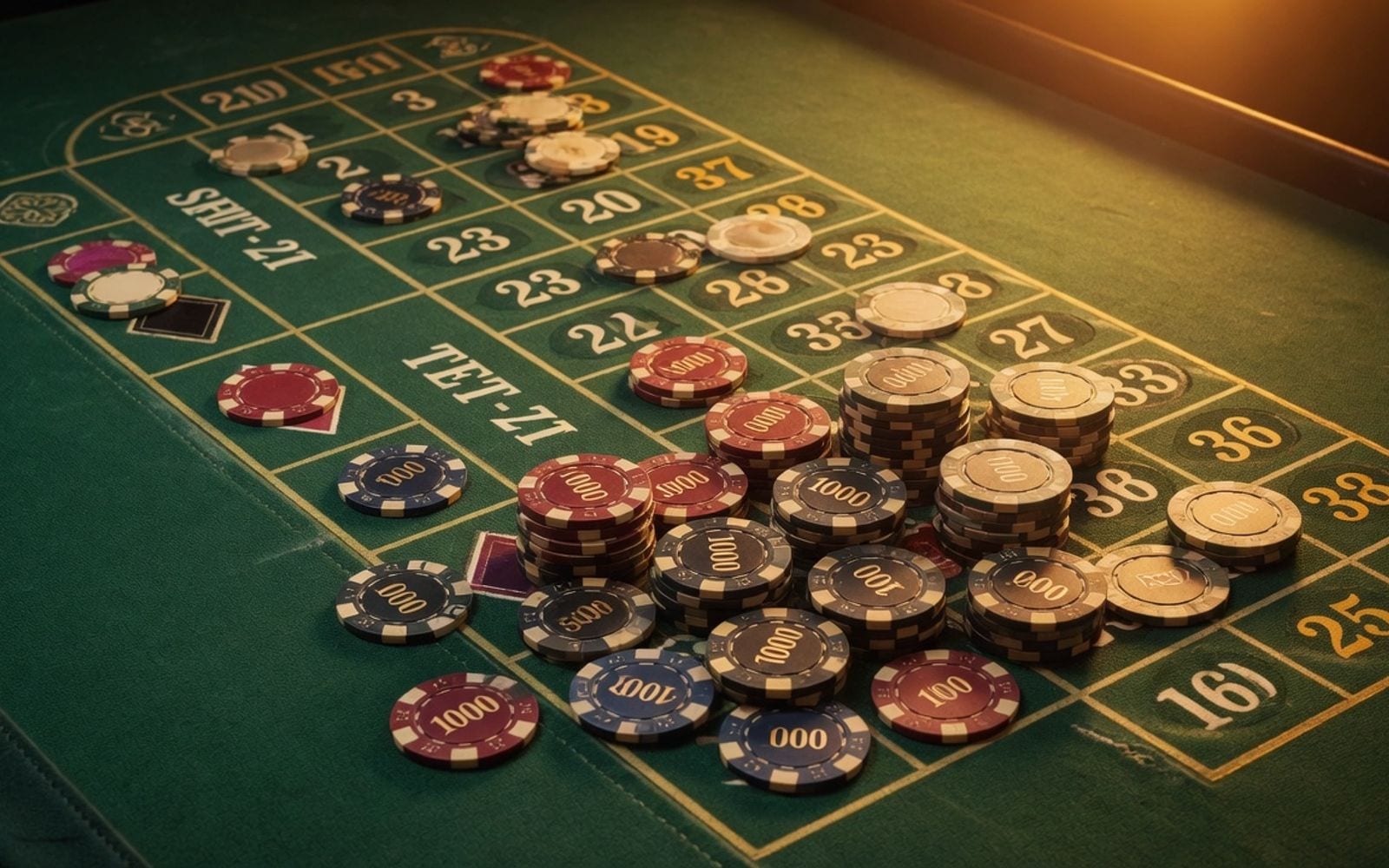
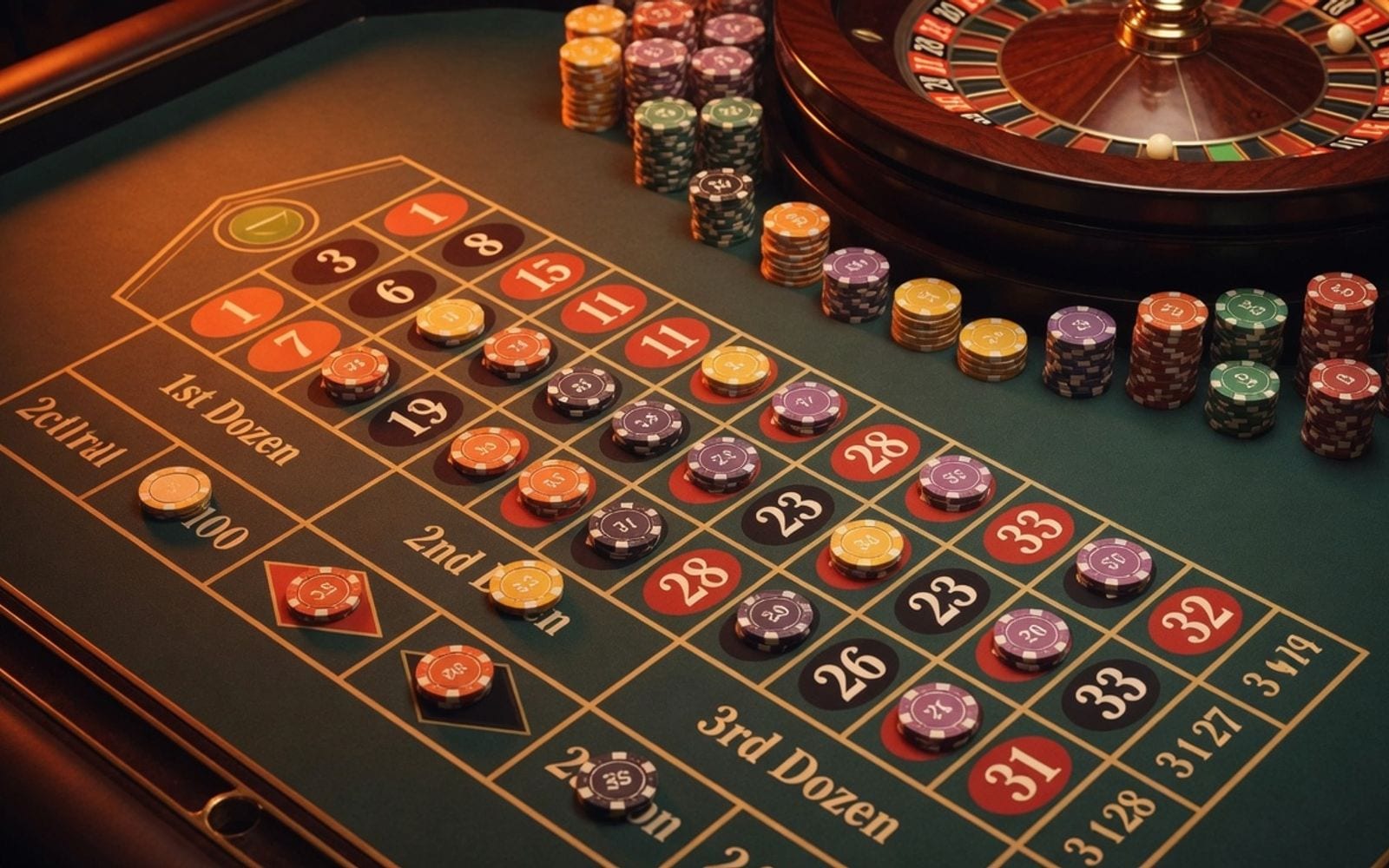
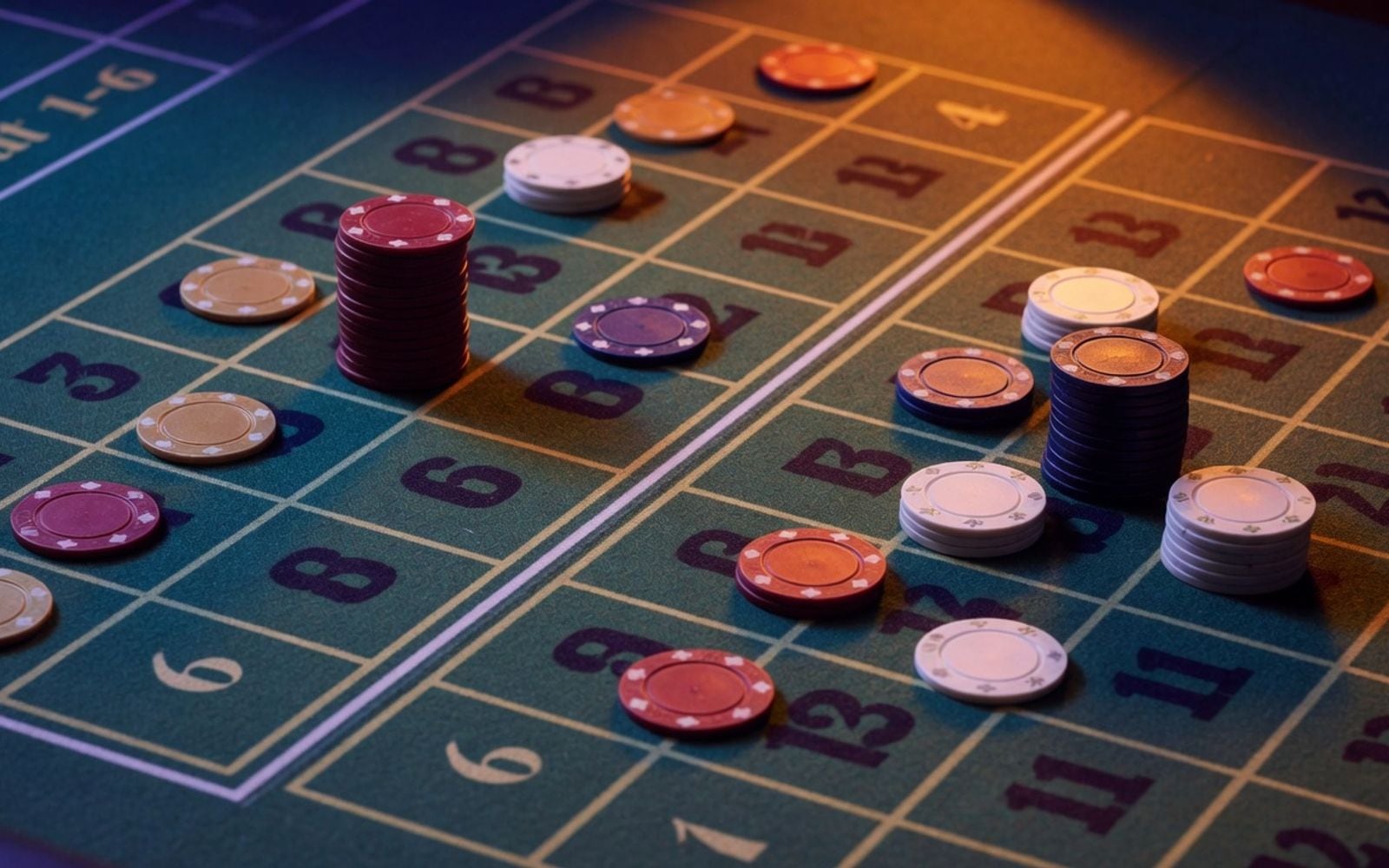
Shotwell is a named number-set system, not a loss-recovery progression. The classic teaching form covers 10 numbers with one six-line (double street) bet plus four straight-up bets, repeated each spin.
The historical pitch (Gambling Times era, late 1970s) often mixed even spacing on the wheel with the idea of physical-wheel bias. On a fair modern wheel or RNG game, spacing is a layout aesthetic — not an edge.
Published Shotwell maps disagree. Treat any list as one frozen experiment: write the six-line range and four singles on a card before chips go down.
Ten numbers is roughly 27% of a European wheel (10/37) and about 26% of American (10/38). Hit rate is moderate; payout depends on whether the six-line or a straight-up hits.
House edge still sits on every chip: about 2.70% European single-zero, about 5.26% American double-zero. Coverage frequency is not the same as positive expectation.
Visual progression
How it works
- Choose one published Shotwell combination and freeze it for the session. Example maps (variants differ): six-line 10–15 with straight-ups 16, 17, 18, 28; six-line 19–24 with 1, 2, 4, 26; six-line 1–6 with 20, 26, 8, 10.
- Set unit weights before play. A common teaching split is several units on the six-line and 1 unit on each straight-up (for example $5 on the six-line and $1 × 4 = $9 total package).
- Place the full package every spin — six-line and all four singles — without dropping “cold” numbers mid-run.
- Resolve the package as one result: six-line hit (5:1 on that bet) vs straight-up hit (35:1) vs total miss (lose package).
- Repeat for a fixed trial count (for example 25–50 packages) or until a written loss limit.
- Do not rotate to a new map because the last open number hit; rotation is a separate experiment with its own sample.
- Prefer European single-zero when available; if you use American, accept the higher ~5.26% edge on the same style of layout.
- Log package cost, hit type (line vs straight), and net — so “it felt even” does not replace arithmetic.
Classic-style package ($5 six-line + $1 × 4 straights)
- Map A: $5 on 10–15 six-line; $1 each on 16, 17, 18, 28. Total risk $9 per spin.
- Spin lands 34 (uncovered): lose full $9.
- Same map again; lands 9: another −$9. Running −$18.
- Lands 23? Wrong map — still a miss if 23 is not on Map A. Stick to written numbers only.
- Switch only if your pre-plan said “Map B next block”: e.g. $5 on 19–24; $1 on 1, 2, 4, 26. Lands 23 → six-line wins $25 on the $5 bet (5:1); four $1 straights lose −$4 → net about +$21 on the spin before prior deficit.
- Later spin lands 26: straight-up pays $35 on $1; six-line and other straights lose ($5+$3) → net about +$27 on the spin.
- After a fixed N packages, stop. Winning a few 35:1 hits does not validate wheel bias; it validates that 10-number coverage sometimes hits.
Pros
- No progression ladder to track under pressure
- Repeatable checklist once the map is written
- Mixes a medium payout (six-line) with high payouts (straight-ups)
- Covers about a quarter of the pockets for frequent-enough action
- Useful for practicing multi-bet placement and package accounting
Cons
- Exact “official” numbers vary by source — easy to memorize the wrong set
- Inside-heavy package variance; clusters of full misses add up fast
- Original bias story does not apply to fair RNG or well-maintained wheels
- Still fully exposed to ~2.70% / ~5.26% house edge
- Misplacing one straight-up silently changes coverage and confuses results
Bankroll & table limits
- Budget in full packages, not in single $1 chips. At $9 per spin, 50 misses without a hit would be $450 — and real sessions mix hits and misses.
- If the six-line is several units, ensure a straight-up win still nets after losing the line and other singles — write that net before you raise unit size.
- Keep session bankroll large enough for dozens of packages at flat size; Shotwell is a coverage grind, not a one-spin parlay.
- American tables need more cushion for the same map because the extra zero worsens long-run drain (~5.26% vs ~2.70%).
Common mistakes
- Mixing two internet maps in one session and calling both “Shotwell.”
- Dropping the six-line after a few misses to “save money,” which destroys the intended coverage balance.
- Raising only the straight-ups after losses (silent Martingale) without a written cap.
- Assuming even spacing on the wheel improves odds on a fair game — it does not change pocket probabilities.
FAQ
Which Shotwell numbers are official?
There is no single universally enforced list. Articles and books publish different six-line + four-straight combinations that aim for spread on the wheel. Pick one map, document it, and test that map only.
How many numbers does Shotwell cover?
In the common form, 10 numbers: 6 on the double street plus 4 straight-ups. That is 10/37 ≈ 27% on European and 10/38 ≈ 26% on American — not half the wheel.
Was Shotwell designed for American wheels?
Many historical write-ups frame it around land-based American wheels and possible physical bias. You can place the same style of bets on European layouts, but fair-wheel math still dominates online RNG and modern maintained wheels.
Does even spacing beat the house?
No. On a fair wheel each pocket has equal probability. Spacing chips around the cylinder is a coverage pattern, not an odds upgrade. Edge remains about 2.70% (European) or 5.26% (American) on standard bets.
Shotwell vs Andrucci — which is better?
Shotwell freezes a map in advance; Andrucci rebuilds a map from a short sample of “hot” numbers. Neither removes house edge. Shotwell is more repeatable; Andrucci is more narrative. Flat betting remains the clean baseline for both.
Compare with other systems
- AndrucciSimilarHigh · Intermediate
Also number-focused, but chooses targets from recent frequency instead of a fixed Shotwell set.
- KavourasSimilarHigh · Advanced
Another named multi-number inside package with fixed geometry and package cost discipline.
- RomanovskyAlternativeMedium · Intermediate
High hit-rate dozens/corners coverage — more numbers, thinner nets than Shotwell’s 10-number mix.
- Double StreetSimilarHigh · Intermediate
Six-line (double street) is the outside piece of classic Shotwell; useful to learn that bet alone.
- Flat BettingAlternativeLow · Beginner
Hold package size constant and skip map folklore — best way to see true session variance.